“3 pokoje z opieką”
Galeria Przyszła Niedoszła, Warszawa 2023
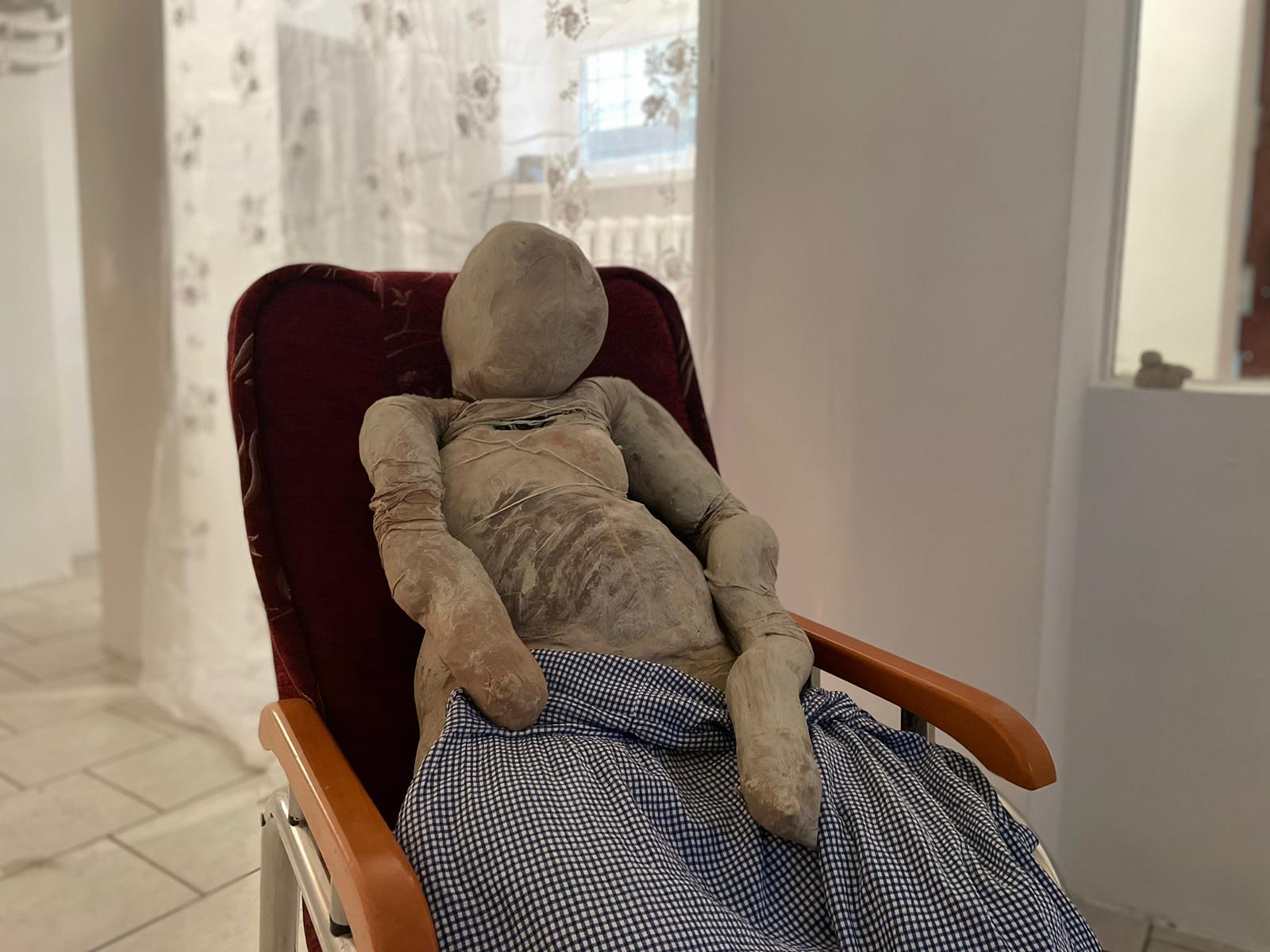
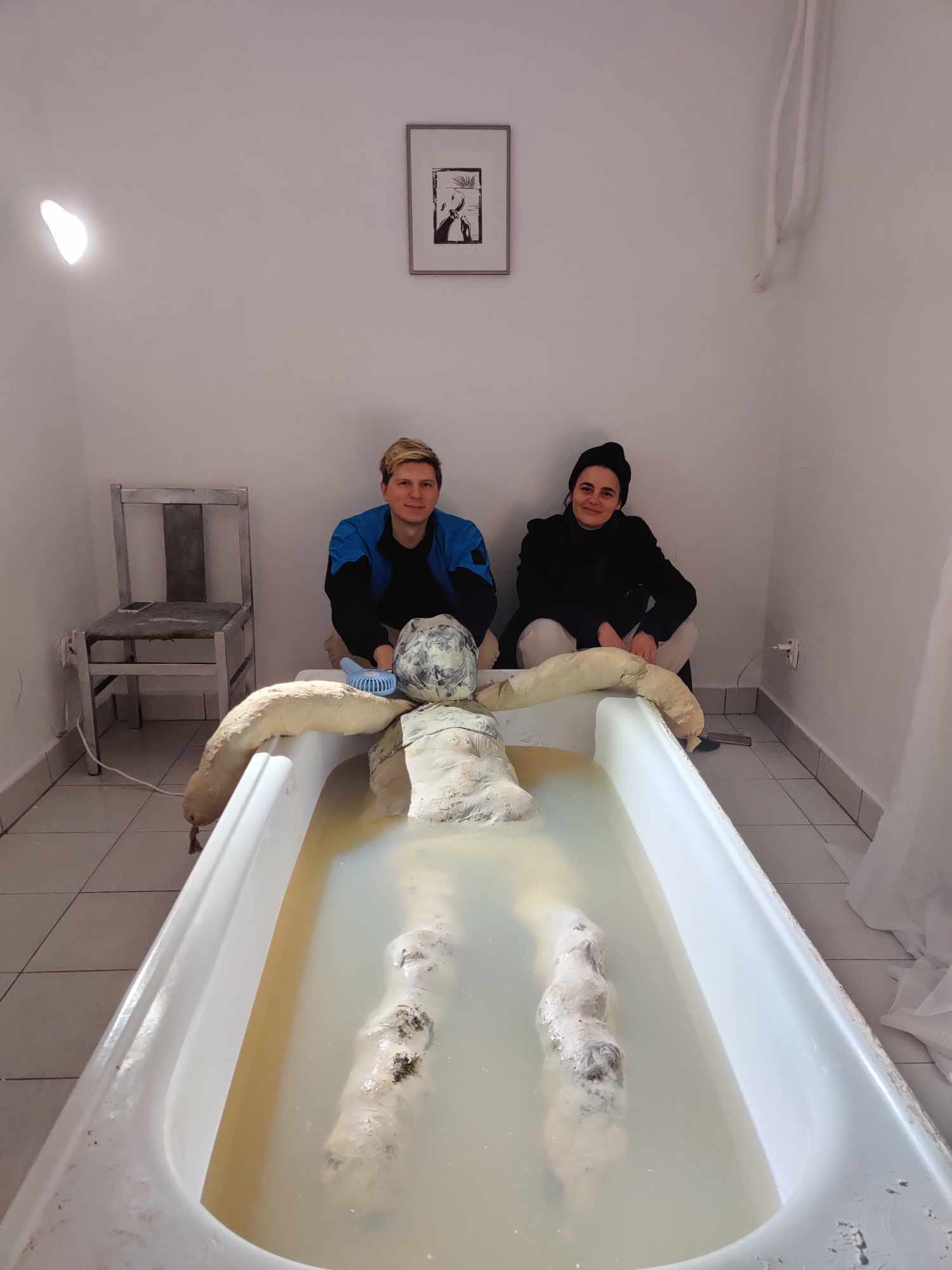
In 2023, the Warsaw gallery Przyszła Niedoszła hosted the exhibition “Trzy pokoje z opieką” (“Three Rooms with Care”), which I co-created with Maria Oblicka. The project addressed care work, illness, and passing away, drawing on my doctoral research (interviews conducted with caregivers of the elderly) and Maria’s artistic practice.
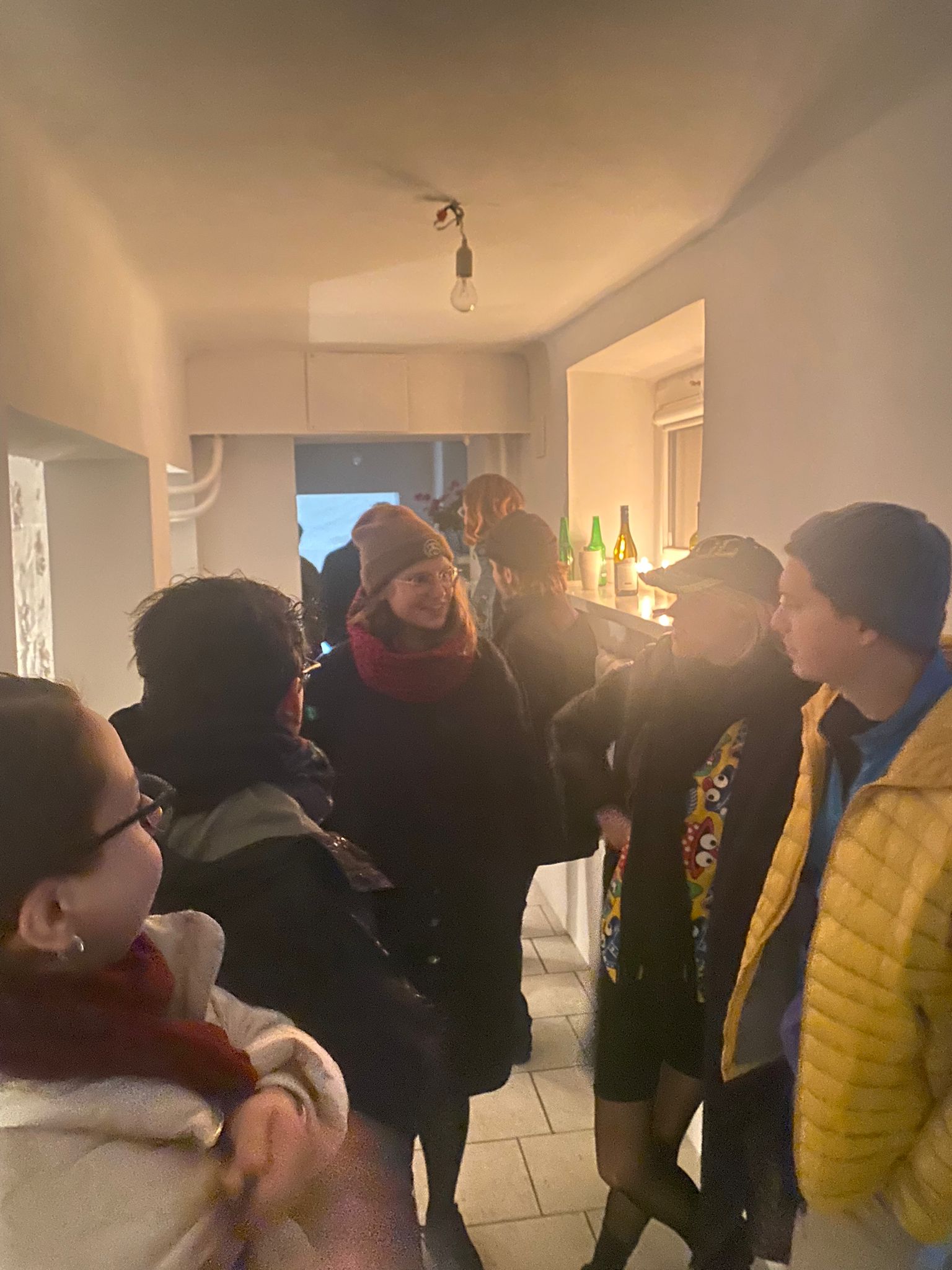
The exhibition took the form of a staged apartment, where we combined academic theory with visual, audio, and tactile experiences. Instead of maintaining a rigid division between curator and artist, we carried out the entire project collaboratively, searching for ways to directly bridge academia and art.

Exhibition text:
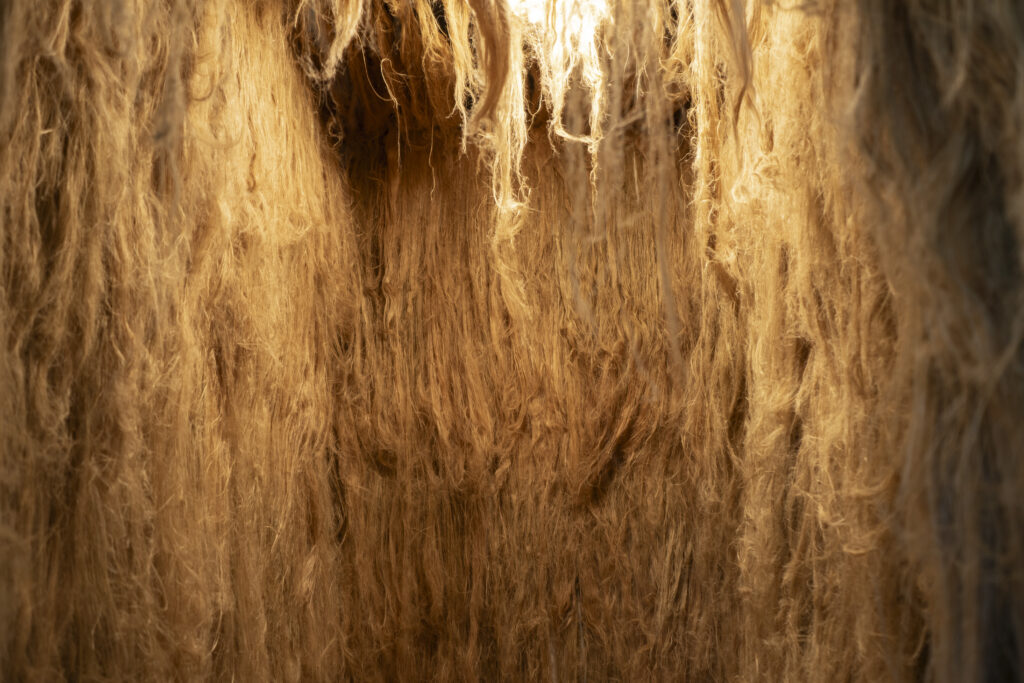
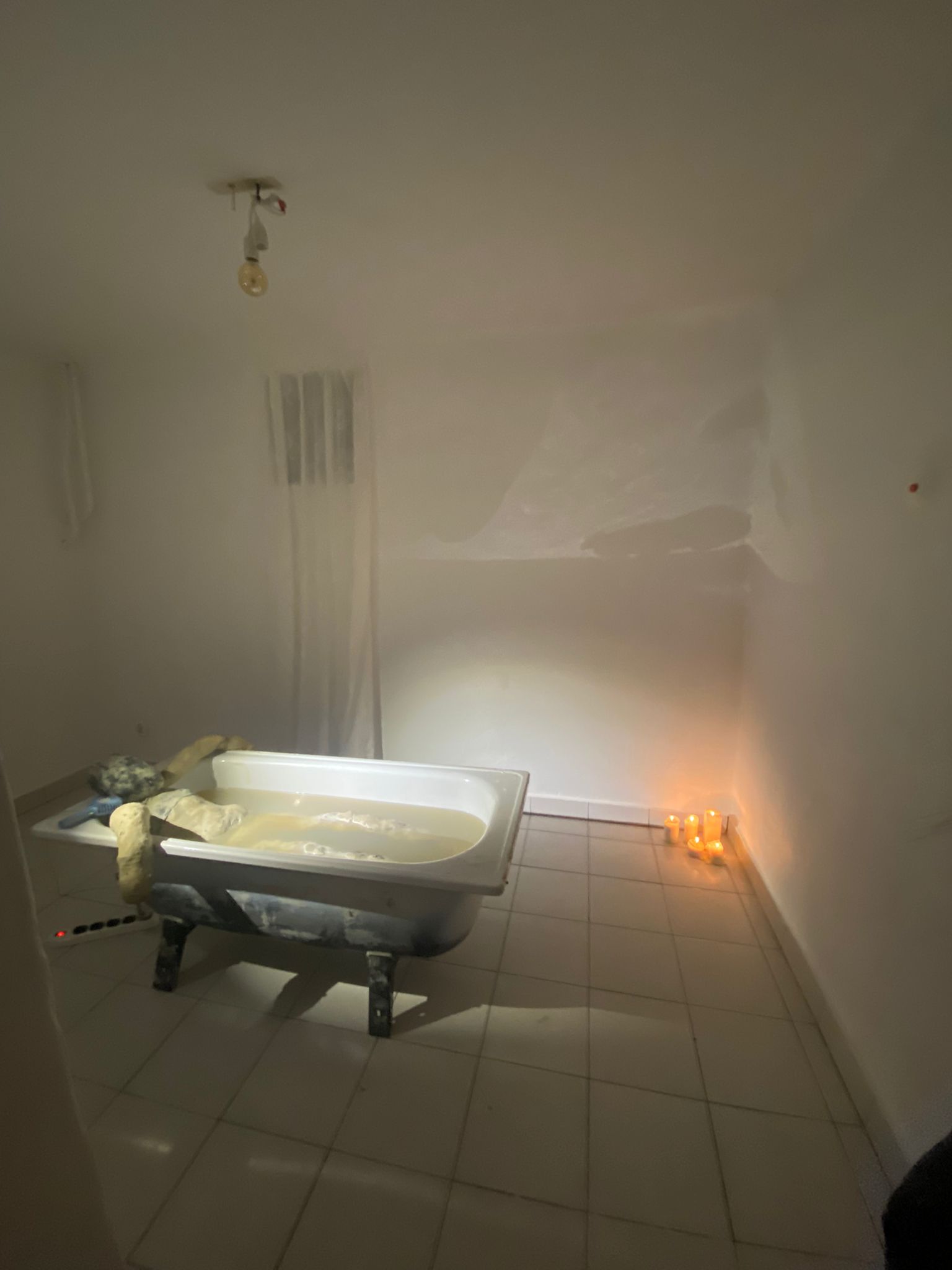
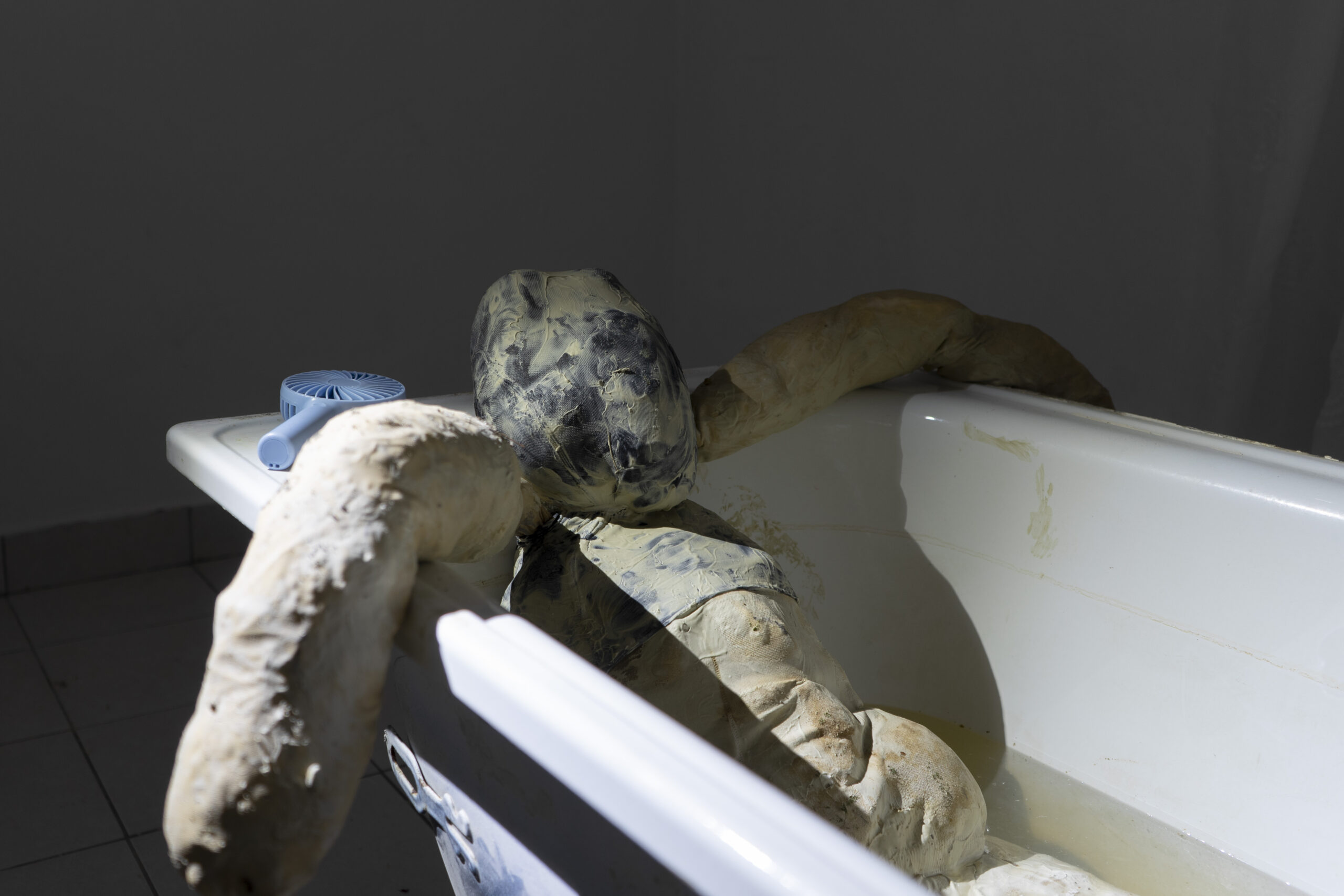
Warsaw, 2051. We enter through the main door of an apartment somewhere in Praga-Północ. In the center of a dark room stands a large metal bathtub full of water. Inside rests an elderly man. A bare lightbulb illuminates his body. In the background sits a figure in light clothing—the caregiver. It appears the man has been in the tub for a long time. Water drips and low murmurs echo in the background. The man listens. Small drops hit the water’s surface with a dull thump. He seems resigned, yet calm. “Three Rooms with Care” is an attempt to glimpse into the intimate world of a person and their caregiver. Through the presence of the viewer, the private space of the apartment shifts into a stage, and the scene before us into a performance. The audience observes their exhausting daily routine. In this installation dedicated to care work, we examine the ties and dependencies that form between the person needing care and the caregiver providing it. We address the commodification of care and reproductive labor, questioning what happens when a stranger is brought into the most private spheres of life—a stranger who often becomes like family, and in life’s final chapter, stands in for the closest kin. Commodifying care means bringing an intimate, personal realm into market exchange and turning it into a service. Tenderness, closeness, and attentiveness become paid tasks within emotional labor, just as touch and presence define the physical aspect of care work. Framing care as reproductive labor highlights its role in social production and reproduction. Recognizing care work as wage labor offers a tool to push for regulation over both the standards of care and working conditions—particularly as this work is overwhelmingly precarious, exploited, riddled with labor violations, and reliant on the labor of migrants. At the same time, we examine this relationship within a broader social context, looking at the tension between the public and private spheres—between the reality of care and a society that prefers not to see it. The final dimension we explore is the relationship between viewer and artwork, where the visitor becomes an intruder in someone’s private world.